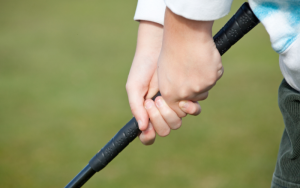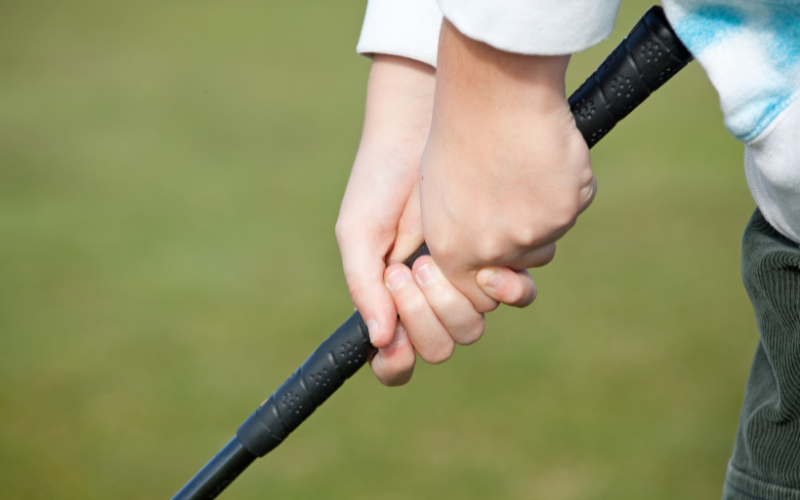
Your grips are the only thing connecting you to the club, and when they wear out, you unconsciously grip tighter—which kills your swing tempo and control.
Re-gripping matters because it directly protects your accuracy, distance, and even your safety on the course, all for a fraction of the cost of new clubs. Keep reading to see exactly how worn grips hurt your game and when you should replace them.
How Worn Grips Quietly Wreck Your Swing
A worn grip doesn't just feel different in your hands—it changes how you swing without you even realizing it.
Once a grip loses its traction, your body reacts instinctively: you squeeze harder to keep the club from slipping. That reflex feels like a safety net, but it's actually undoing your swing from the inside out.
Here's why that matters so much. Grip pressure has a direct effect on how well you can hinge your wrists, and wrist hinge is one of the biggest sources of power in golf. Instructors generally recommend keeping your grip pressure light, somewhere around a 4 or 5 on a 1-to-10 scale.
That lighter hold lets your wrists move freely and gives the clubface room to rotate properly through impact, which is what helps you square it up at the right moment. Choke up on the club out of fear, and you lose both.
The tension doesn't stay contained in your hands, either. Once you start gripping tighter to compensate for a slick surface, that tightness spreads:
- From your hands into your forearms
- From your forearms into your shoulders
- From your shoulders into your backswing turn itself, shortening and restricting it
By the time you reach the top of your swing, you're already working against yourself—less rotation, less speed, less control over where the clubface is pointing.
Then there's impact, where the real damage shows up on the scorecard. Even a slip so small you can't feel it happening gets magnified by the time the ball reaches its target, turning a barely-there miss into a shot that's yards off line.
Worn grips make this worse in a second way, too: as the material smooths out and hardens, it dulls the feedback you'd normally get from the clubhead at the moment of contact.
You lose the subtle feel that tells you whether you struck it clean, so mishits start happening more often and you notice them later than you should.
Why Grips Wear Out (Even If You Don't Play Much)
Grip breakdown comes from two directions at once, and only one of them has anything to do with how often you actually swing the club.
The first is use-based wear, and it's the one most golfers already expect. Every time your hands or glove move across the grip, friction gradually polishes away the surface texture that gives you traction.
On top of that, oils, sweat, sunscreen, bug spray, and everyday dirt from your hands work their way into the material, building up a slick film that cuts down on tackiness over time.
This is why the areas under your thumbs tend to wear out first—they take the most friction and absorb the most residue with every swing.
The second is age and environmental wear, and this one catches people off guard because it happens whether you play or not. Rubber compounds oxidize simply from exposure to air, a chemical process that gradually hardens the material and strips away its tackiness.
UV exposure adds to the damage by breaking down the molecular structure of the grip, which shows up as fading, brittleness, and eventually cracking. Heat speeds all of this up, especially if clubs spend time somewhere like a hot trunk or garage.
That second category is the important one to understand: a set of clubs stored in a closet all winter isn't spared from this process. It's still aging, still oxidizing, still losing the qualities that make a grip feel secure and responsive.
What makes all of this tricky is the pace at which it happens. There's no single moment where a grip suddenly goes from “fine” to “worn out.”
The decline is slow and steady, which is exactly why most golfers don't clock it in real time. Instead, they notice the symptoms—mishits, less control, a nagging feeling that something's off—long before they connect those problems back to the grips themselves.
Signs Your Grips Need Replacing
You don't need to guess whether your grips are due for a change. There are clear, physical markers that tell you exactly when it's time, and most of them are easy to spot once you know what to look for:
- Shiny or glossy patches. This is the single most obvious tell. If you notice areas on the grip that look almost polished compared to the rest, that's the surface texture wearing away.
- A slick or slippery feel. This tends to show up first, or worst, in humid or rainy conditions, when moisture combines with an already-worn surface to reduce traction even further.
- Hardening. A healthy grip should feel soft and slightly tacky. If it's started to feel stiff or firm in your hands, the rubber has lost the qualities that help absorb shock and maintain feel.
- Cracking, splitting, or crumbling. Whether it's the rubber itself or the cord woven into it, any visible breakdown of the material means the grip has moved from “worn” to “failing.”
- Faded or inconsistent color. Grip material should look and feel the same from top to bottom. Uneven color or fading paint-fill is a sign the material underneath is degrading unevenly too.
- Visible wear where your fingers and thumbs sit. Since these are the highest-friction zones, they're usually the first place damage shows up—even before the rest of the grip looks obviously worn.
One simple way to check where things stand is the twist test: hold the club with a normal, moderate grip and try to twist it in your hands. If it turns even slightly without much effort, the grip is already compromising your shots—and possibly your safety.
That safety piece is worth taking seriously on its own. A club that twists or slips isn't just a performance problem anymore. If it happens mid-swing, especially at speed, the club can shift unexpectedly in your hands or fly loose entirely, putting you and anyone nearby at risk. Any of these warning signs, especially twisting under normal pressure, means it's time to replace the grip rather than wait it out.
How Often You Should Actually Re-Grip
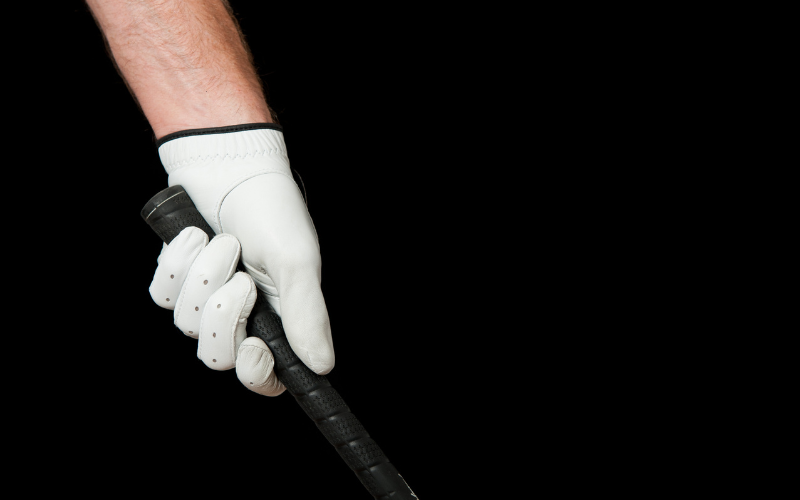
The baseline rule that most fitters and instructors agree on is simple: re-grip once a year, or every 30 to 40 rounds, whichever comes first. Range sessions count toward that total too, so if you practice often, you'll hit that number faster than your on-course rounds alone would suggest.
That baseline shifts depending on how much you actually play:
- Occasional players (a handful of rounds a year) can often stretch grips out to 2 years, though they should still check periodically for wear.
- Regular players (about once a week) should stick close to the once-a-year mark.
- Avid players (multiple rounds or practice sessions a week) should plan on replacing grips every 6 to 9 months.
- Tour pros, who play and practice at a volume most golfers never will, often re-grip every 6 weeks to 2 months.
Climate plays a bigger role than most golfers assume. Hot, humid conditions speed up wear by roughly 25 to 30%, since heat softens the material and humidity adds moisture that breaks down tackiness faster.
Interestingly, dry climates aren't necessarily safer—the lack of moisture can dry out and crack grips just as aggressively, so both extremes shorten the timeline rather than just one.
Material choice adds another layer to the equation:
- Standard rubber grips offer a balanced feel and moderate durability.
- Corded or cotton-cord grips hold up longer, since the woven fibers keep providing traction even as the surrounding rubber wears down.
- Hybrid or multi-compound grips fall in between, often blending cord and rubber for a mix of durability and feel.
- Soft polymer or wrap-style grips feel great right out of the box but wear out fastest, trading longevity for immediate comfort.
If you'd rather not think about re-gripping often, lean toward corded or hybrid options. If you prioritize a soft, tacky feel above all else, just know you're signing up for more frequent replacements to keep that feel consistent.
The Real Cost of Re-Gripping vs. the Cost of Ignoring It
Re-gripping is one of the least expensive things you can do to improve your game, which makes it easy to underestimate. A single grip typically runs somewhere in the $7 to $15 range, and labor to install it usually adds another $1 to $5 per club.
Multiply that out for a full set of 13 or 14 clubs, and you're generally looking at $80 to $200 total, depending on the grips you choose and where you get the work done.
If you're comfortable doing it yourself, the math gets even better. A basic re-gripping kit—double-sided tape, solvent, a hook blade, and a vise—costs around $20 as a one-time purchase, and after that you can re-grip as often as you want without paying labor again.
Installation itself only takes about 10 to 15 minutes per club, though you'll want to let the grips cure before playing. Give it at least a few hours, and ideally closer to 24, to make sure everything's fully set.
Now compare that to the alternative. A new set of clubs costs hundreds, often thousands, of dollars. Worn grips, meanwhile, are quietly costing you strokes every single round you play without you spending a cent to fix the problem—you're just leaving performance on the table instead.
And that performance gap is measurable. Golfers using fresh grips tend to see:
- Faster ball speed
- Longer carry distance
- Tighter shot dispersion, meaning more consistency shot to shot
Despite how affordable and impactful this fix is, most golfers still don't do it on schedule. Only a small percentage of players re-grip as often as recommended, which means the majority are playing with equipment that's silently working against them. For the cost of a round of golf or two, you can eliminate one of the most overlooked performance drains in the game.
How to Extend Grip Life and Keep Them Performing Longer
While re-gripping on schedule is non-negotiable, a bit of regular care in between can stretch your grips' useful life and keep them performing closer to new for longer.
Start with a simple cleaning routine. Every 5 to 10 rounds, wash your grips with warm water and a mild dish soap, using a soft brush to work away built-up oils and dirt without damaging the surface.
Rinse thoroughly and let them dry away from direct sunlight. This one habit does more than almost anything else to keep tackiness intact and slow down the buildup of the grime that causes slickness in the first place.
For grips that have lost some of their tack but aren't damaged yet, a quick wipe with rubbing alcohol or glass cleaner can help revive that surface grip, at least temporarily. It's a useful trick between deeper cleanings, especially if you notice your grips starting to feel a little slicker than usual.
Storage matters just as much as cleaning:
- Keep clubs out of hot trunks, where heat can soften tape and dry out rubber
- Avoid leaving them in direct sunlight for extended periods
- Steer clear of uninsulated garages or sheds where temperature swings are extreme
After any wet or dew-soaked round, dry your grips off before putting your clubs away. Bagging them while still damp traps moisture against the material, which speeds up the same breakdown process you're trying to avoid.
That said, cleaning and good storage habits have limits. They can slow down wear and buy you time, but they can't reverse structural damage.
Once a grip has cracked, developed a hard glaze, or smoothed out in the areas where your thumbs sit, no amount of cleaning will bring it back.
At that point, replacement is the only real fix—these habits are about extending the life you have left, not eliminating the need for fresh grips altogether.
The Bottom Line
Your default should be simple: re-grip once a year, or every 30 to 40 rounds, and do a quick visual and twist-test check on your grips every few weeks in between. That small habit catches problems before they start costing you strokes.
Beyond the calendar, pay attention to how you actually play. If you're in a hot or humid climate, or you practice as much as you play, lean toward corded or hybrid grips built to hold up longer, and shorten your replacement window accordingly.
If you golf occasionally and store your clubs well, you likely have more flexibility—but don't let “occasional” turn into “forgotten.”
At the end of the day, few upgrades in golf offer this much return for this little cost. A fresh set of grips runs a fraction of what a new driver or iron set would cost you, yet it directly affects your control, your distance, and your consistency every time you swing.
Staying on top of it isn't a luxury—it's one of the simplest ways to make sure your equipment is actually working for you, not against you.