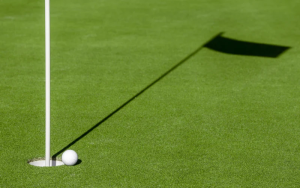
The Ocean Course at Kiawah Island Golf Resort is a fully public Pete and Alice Dye-designed championship links on the Atlantic coast of South Carolina, ranked the No. 5 public course in America by Golf Digest and widely considered the toughest resort course in the country.
Whether you're planning your first visit or just want to know what you're getting into, here's everything you need to know.
What Makes the Ocean Course a Bucket-List Round
Few public courses in America carry the kind of résumé the Ocean Course has built in just over three decades. Pete and Alice Dye designed and constructed it between 1989 and 1991 for a single purpose — to host the 1991 Ryder Cup — making it the first course in history awarded a major event before it was even designed.
Hurricane Hugo wiped out the early construction in September 1989, forcing a full restart, and the course still opened in time for one of the most dramatic Ryder Cups ever played.
Alice Dye's most consequential decision was raising the entire course above the dune line so every hole would have an ocean view.
It's a beautiful call that comes with a catch — it leaves every single hole fully exposed to Atlantic wind, which turns out to be the course's most punishing defense.
The championship record speaks for itself:
- 1991 Ryder Cup (“War by the Shore”) — USA defeated Europe 14½–13½
- 2012 PGA Championship — Rory McIlroy won by a record eight strokes
- 2021 PGA Championship — Phil Mickelson became the oldest major champion in history at 50
- 2031 PGA Championship already confirmed
Golf Digest currently ranks it the No. 5 public course in America (2025–26), and it has held the No. 1 spot in South Carolina every year since 2011.
What makes it genuinely special for recreational golfers is that none of that history is behind a gate. No membership, no homeownership, no invitation required — the Ocean Course is open to the public, making a round here as close to a true bucket-list experience as public golf gets.
Course Layout, Yardage, and Signature Holes
The Ocean Course plays as a par 72 with 10 holes running directly along the Atlantic — more seaside holes than any other course in the Northern Hemisphere.
The remaining eight run parallel to the coast, meaning ocean wind is a factor on every single hole regardless of direction.
The routing follows a figure-eight pattern rather than a simple out-and-back layout. Each nine plays “4½ out and 4½ back,” which means the wind is constantly shifting relative to you as you move through the round.
There's no prevailing wind direction here, so you never get comfortable — Dye essentially built two courses in one depending on which way the wind blows on a given day.
Tee Options
| Tee | Yardage | Rating / Slope |
|---|---|---|
| Black | 7,385 | 77.4 / 153 |
| Gold | 6,793 | 74.7 / 150 |
| Silver | 6,356 | 72.1 / 140 |
| Blue | 6,005 | 70.5 / 131 |
| Blue/Red | 5,702 | 68.9 / 129 |
| Red | 5,226 | 66.5 / 120 |
The championship configuration — used for PGA Championships — stretches to roughly 7,772–7,820 yards with a Course Rating of 79.1 and the USGA's maximum Slope of 155. That setup isn't on the daily resort scorecard.
Three Holes Worth Knowing Before You Play
No. 2 (Par 5, ~543 yards): A double-marsh-carry par 5 that demands two clean carries over marshland. Named one of the best par 5s in America by GOLF Magazine, it sets the tone early for what the course asks of you.
No. 17 (Par 3, ~221 yards): Dye's personal favorite hole on the course. Alice insisted on adding an 8-acre lake here, reasoning that players at Ryder Cup level could handle bunker shots — so water made more sense as a penalty. It played a pivotal role in the 1991 Ryder Cup and remains one of the most feared par 3s in championship golf.
No. 18 (Par 4, ~439 yards): A quintessential Dye finisher — demanding, exposed, and unforgiving. In 1991, both Hale Irwin and Bernhard Langer faltered here, and Langer's missed putt decided the Ryder Cup. Caddies consistently cite it as the hardest hole on the course.
Why This Course Is So Difficult

The numbers alone tell part of the story. The Ocean Course holds the highest combination of Course Rating (79.1) and Slope (155) in America — and 155 is the USGA's absolute maximum. The 2021 PGA Championship setup stretched to 7,876 yards, making it the longest course in major championship history at the time.
But raw length isn't what breaks most golfers here. There are four distinct difficulty drivers, and they compound each other:
1. Wind — the primary defense Every hole is fully exposed to Atlantic wind, and the resort itself notes that a single hole can play up to eight clubs differently depending on the day's direction and strength. April is statistically the windiest month. The 2012 PGA Championship saw gusts up to around 40 mph, producing a Friday scoring average of 78.11 — the highest in PGA Championship history to that point. On a calm day, this is a different golf course entirely.
2. The greens Small, elevated, and planted with seashore paspalum, the greens have severe run-offs on all sides. Miss them, and you're dealing with awkward chip angles from below the putting surface. The damage in most rounds accumulates here, not off the tee.
3. Approach complexity Waste areas and marsh border the plateaued fairways, so any approach that misses the wrong way tends to find a penalty situation rather than a straightforward recovery. Precise, well-flighted iron play — the kind that accounts for wind — is what separates good scores from bad ones.
4. Visual intimidation Dye was deliberate about making the tee shots look more threatening than they actually are. The fairways are genuinely generous, but the visual presentation off the tee — marsh, waste areas, ocean in the background — creates doubt that leads to tentative swings and poor results. First-timers who trust their lines and commit typically outperform those who don't.
The honest takeaway: recreational golfers who play the right tees and take a caddie will find it demanding but very playable. The difficulty is real, but it's concentrated in specific moments rather than relentless from the first tee.
Green Fees, Booking, and Resort Access
The Ocean Course is open to the public, but how you book significantly affects both what you pay and what's actually available to you.
What You'll Pay
Pricing breaks down along two lines — resort guest or non-guest:
- Stay-and-play packages (resort guests): ~$234–$330 per round depending on season
- Non-resort guests: ~$373–$463 per round
- Twilight rates (after ~2 p.m., roughly June–August): below ~$400 for non-guests, ~$260 for guests
- 36-hole replay rate: ~$225 if you play another Kiawah course first that morning
Peak in-season walk-up rates have been reported as high as $600 in recent seasons, so timing and booking method matter.
Booking Windows — This Is the Key Difference
Resort guests can book tee times at the time of their lodging reservation, sometimes up to a year in advance. Non-resort guests are generally limited to booking within about 30 days of their play date, subject to whatever's left.
In peak spring and fall seasons, that window can mean limited availability or less desirable tee times.
If playing the Ocean Course is the primary reason for your trip, staying on-resort isn't just a convenience — it's the most reliable way to secure the round you want.
How to Book
- Online: kiawahresort.com
- Phone: 843-266-4670 (Ocean Course pro shop)
- Through a golf-package operator
Calling the pro shop directly is worth doing if you have specific scheduling needs or want to ask about current availability and rates before committing.
Caddies, Walking Policy, and How to Prepare
The Ocean Course is walking-only for most of the year. Carts are available only during summer months (June–August) for players teeing off after 10 a.m., and even then they're restricted to paths.
Anyone using a cart in summer is required to take a forecaddie. For the other eight-plus months of the year, you're walking — so come prepared to cover 7,000+ yards over dune terrain.
The Caddie Program
The caddie fee is built into your green fee, but gratuity is expected and the recommended amounts are specific:
- Walking caddie: $120 per player
- Forecaddie: $60 per player
Each walking caddie carries a maximum of two bags. The program has been running since 2000 and the caddies are long-tenured — their knowledge of wind patterns, line off each tee, and green reads is genuinely useful here in a way it isn't at most courses.
Given how much the wind affects club selection and ball flight, a good caddie read can realistically save you several strokes.
Choosing Your Tees
This is where most first-timers go wrong. A rough guide:
- Handicap under 10, carries 250+ yards: Gold (6,793) or Black (7,385)
- Handicap 10–18, carries 220–250 yards: Silver (6,356)
- Handicap 18+, or carries under 220 yards: Blue (6,005) or Blue/Red (5,702)
The goal is to have mid-irons into greens, not long irons or hybrids. The course is hard enough without compounding it with the wrong tees.
Day-Of Preparation
Arrive 60–90 minutes before your tee time. The driving range is the most exposed part of the property — using it early gives you a real sense of the wind conditions you're about to play in, which is more valuable than any amount of range time at home. Hit the putting green after, and factor in time to enjoy the clubhouse before your round.
Best Time to Visit and Getting There
When to Go
The shoulder seasons are the clear sweet spot. April through May and mid-October through November offer the best combination of mild temperatures, lower humidity, and more manageable wind. October in particular is consistently cited as the single best month — conditions tend to be calm, comfortable, and predictable compared to the rest of the year.
A quick seasonal breakdown:
- Spring (April–May): Excellent conditions, though April is statistically the windiest month — good to know when planning
- Fall (October–November): The most reliably pleasant weather; October is the top pick
- Summer (June–August): Hot and humid, with afternoon thunderstorms a near-daily occurrence — if this is your only option, book the earliest available morning tee time
- Winter (December–February): Mild temperatures in the 50s–low 60s, but cold Atlantic winds can make for a brutal round
Hurricane season runs June 1 through November 30, with peak risk from mid-August to mid-October. If you're traveling during this window, book with flexible cancellation terms or consider travel insurance.
Getting There
Kiawah Island sits about 21–25 miles southwest of downtown Charleston, roughly a 45-minute drive from Charleston International Airport (CHS). Charleston Executive Airport on Johns Island is only about 10 miles away and is the preferred option for private aircraft.
There is no public transit to the island. Your practical options:
- Rental car (recommended): Gives you full flexibility on and off the island
- Private car service: A reasonable alternative if you plan to stay on-property; pre-book before arrival
- Rideshare: Uber and Lyft serve the area, but pickup waits on the island can run 15–20 minutes
One logistical detail worth handling early: if you're flying, consider shipping your clubs ahead via Ship Sticks rather than checking them. It simplifies airport travel and your clubs arrive ready at the resort.
Conclusion
The Ocean Course is one of the few places where world-class championship history and genuine public access exist in the same place.
Book a stay-and-play package in the shoulder season, take a caddie, play the right tees, and you'll get the most out of one of the best rounds public golf has to offer.
Come prepared for the wind — it will define your day far more than anything else on the course.